 English
  Русский
 Driving and riding in Bali's rainy season
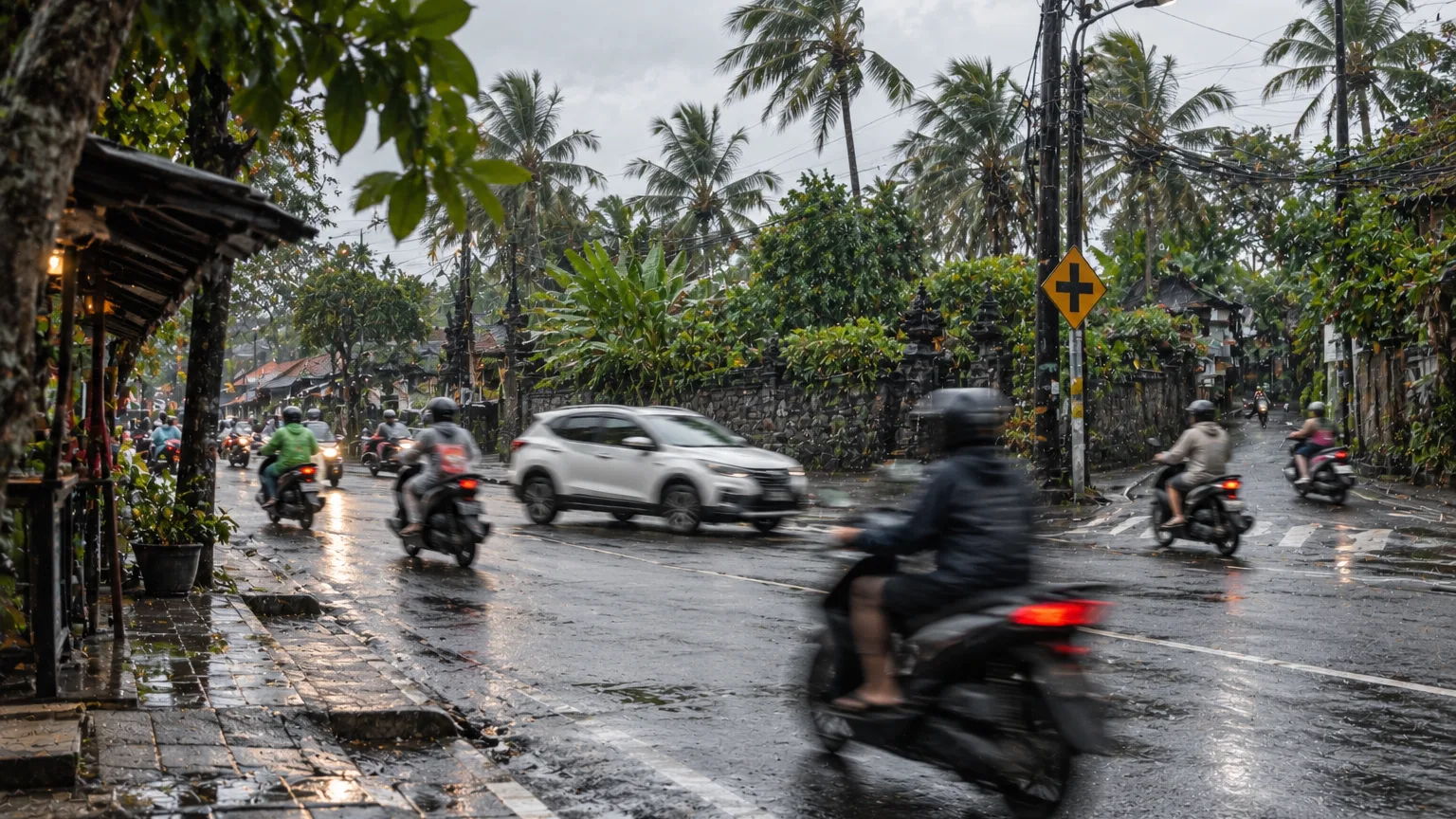
Bali's rainy season runs roughly from November to March. It doesn't mean every day is a washout. A heavy afternoon shower can leave you with wet roads and a clear evening. Other days the rain settles in and stays.
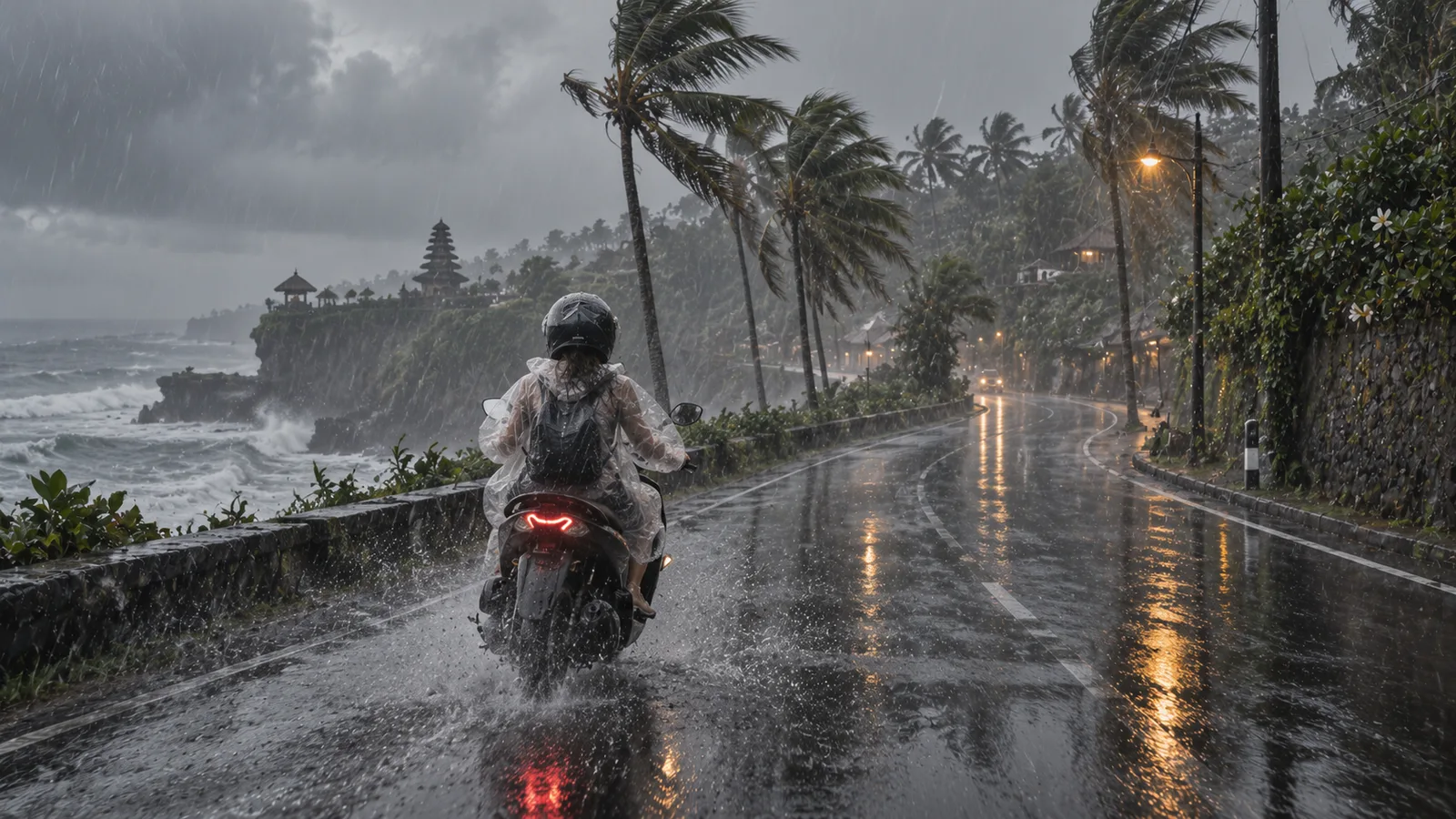
What changes is the time everything takes. A short trip around Canggu, a drive up to Ubud or a bike left outside the villa overnight all need more thought than they would in the dry season.
When and where it rains
December and January are usually the wettest months. The rain comes in bursts rather than steady drizzle, but don't build your day around it stopping at a particular hour.
Conditions change as you head inland. It can be dry in Seminyak and raining up towards Ubud, and drainage differs from street to street: the low parts fill fast and take a long time to clear. For a trip further north, check the weather where you're going as well as where you're staying.
Apart from the Christmas and New Year weeks, this is the quiet season. BPS Bali counted 450 697 foreign arrivals in February 2025 against 697 110 in July: roughly a third fewer visitors, shorter queues, easier parking. It still doesn't stop a wet evening from holding up traffic in Canggu.
Taking a scooter
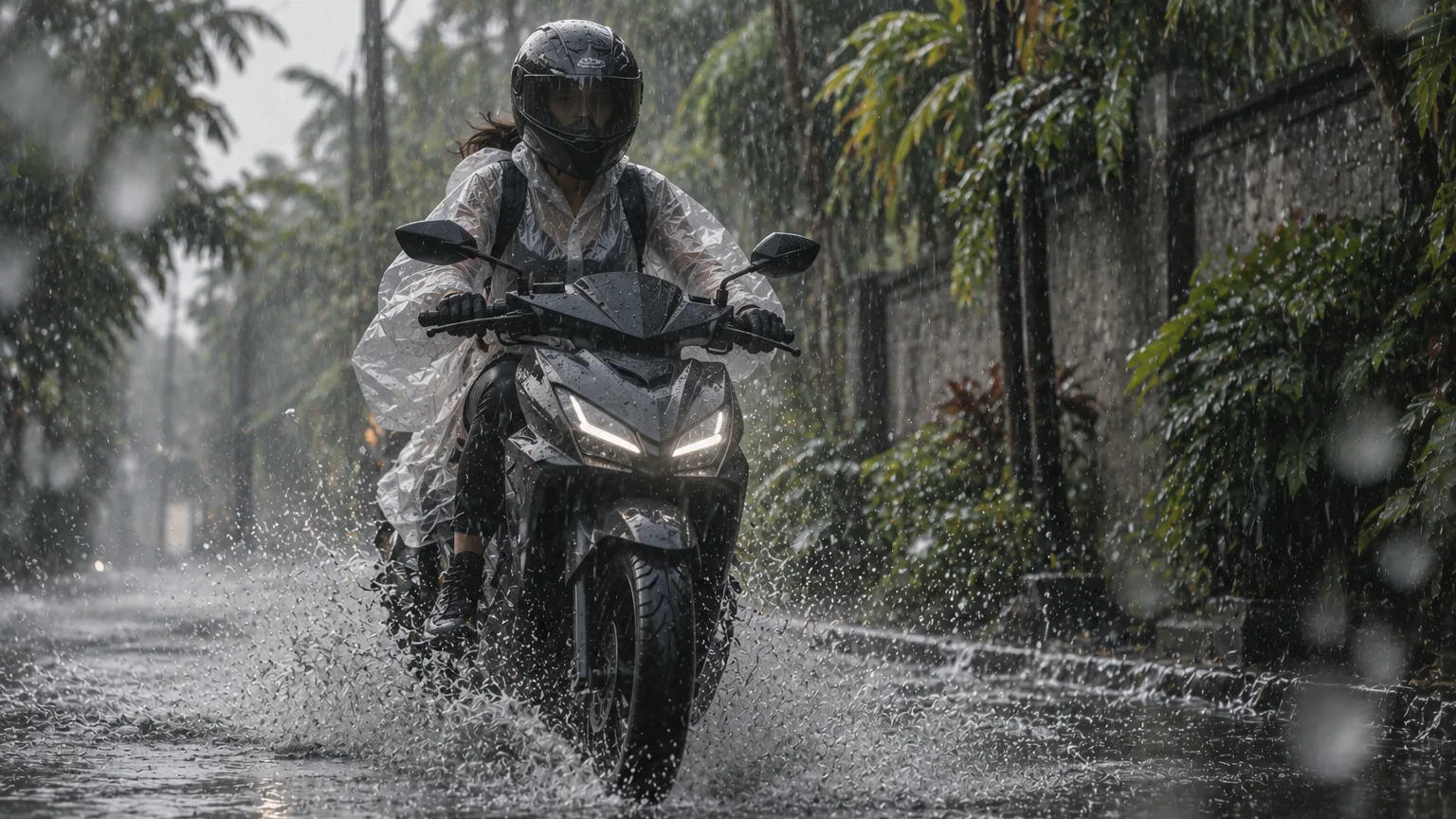
For short trips around Canggu and Seminyak a scooter is the easiest thing to park. In a downpour you and everything you're carrying still get wet.
Most of our fleet is automatic scooters. Tell us what you've ridden before and whether you're carrying a passenger, and we'll confirm the options for your dates. In the rainy season ask for the Honda ADV 160 or the Yamaha NMAX 155. The ADV has a taller screen than a standard scooter. The rest are on the bike rental page.
Brake earlier and go easier on the throttle than you would in the dry. Helmets come with every bike and we agree the size in chat before we bring it out. No more than two people on a bike.
Ask for a raincoat when you book and we'll pack one. Flip-flops slip on wet footpegs, so wear shoes that grip, and keep your phone and documents in a waterproof pouch.
It rains at three in the morning, the sky is clear by eight, and the seat is still soaked. Keep a rag in your bag, somewhere you can reach without unpacking it.
Parking overnight
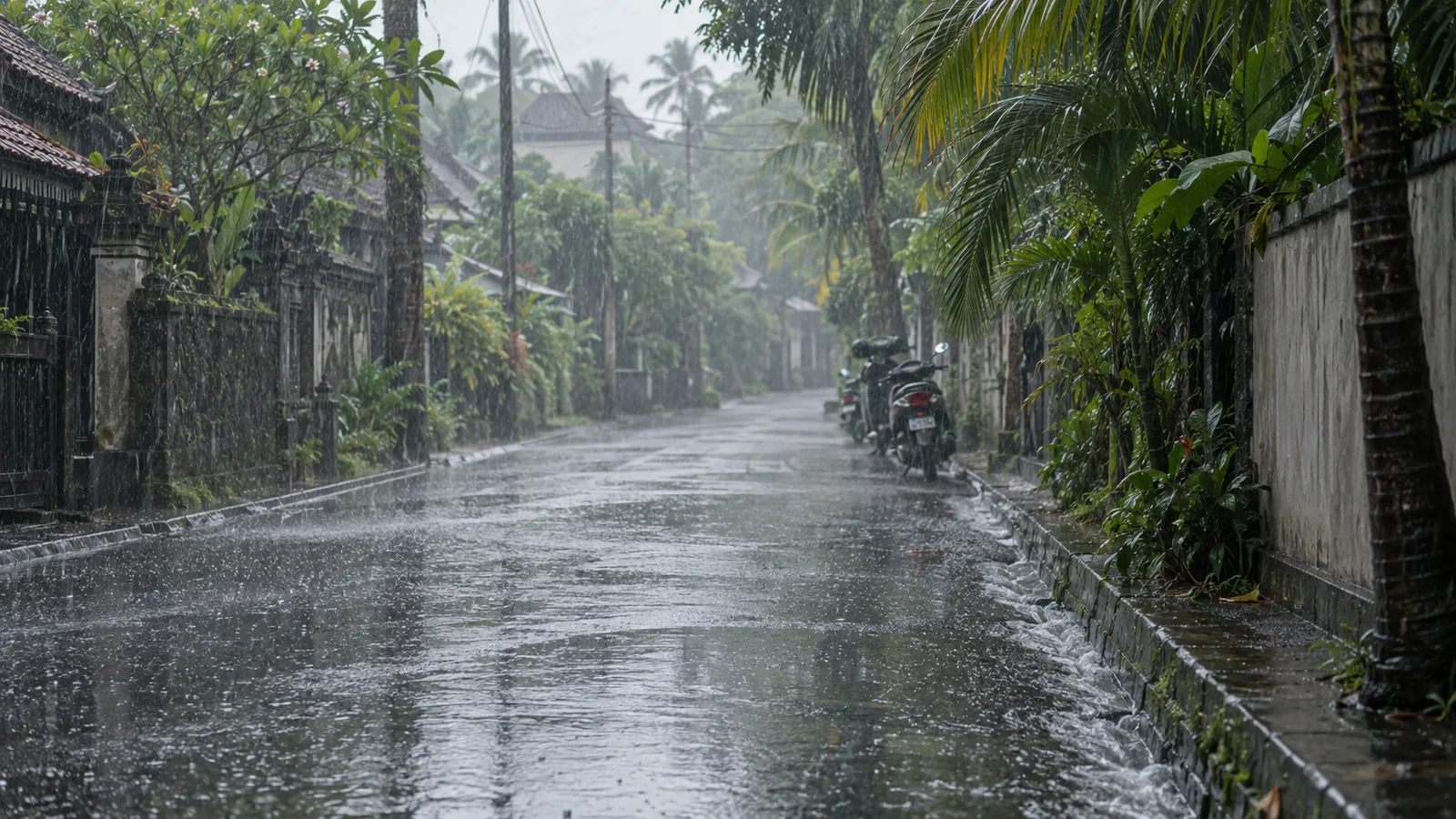
Low ground near the rivers floods fast in heavy rain, and the water can rise around a parked bike while you're asleep. Park higher up if you have the choice.
At a villa or guesthouse, ask where the water collects before you leave the bike out. A spot that's dry when you arrive can be the lowest part of the driveway.
If water has reached the engine or the electrics, leave the bike switched off and message us before you try to start it.
Taking a car
A car keeps you and your bags dry, and it's the practical choice for the airport, for a family, or for a day in Ubud when the forecast is wet.
The Honda Brio is a compact five-seat automatic, an easy size for narrow lanes, though parking and evening traffic in Canggu and Seminyak still take time. The Toyota Raize is the next size up, still an automatic, with a higher seating position. For more space again, compare the rest on the car rental page.
Before you set off, find the wiper and demister controls. If the glass starts misting up halfway to Ubud, you'll know where they are.
Leave extra time for the airport. Rain slows the whole run through the south, even when the road outside your accommodation looks clear.
Wet roads and standing water
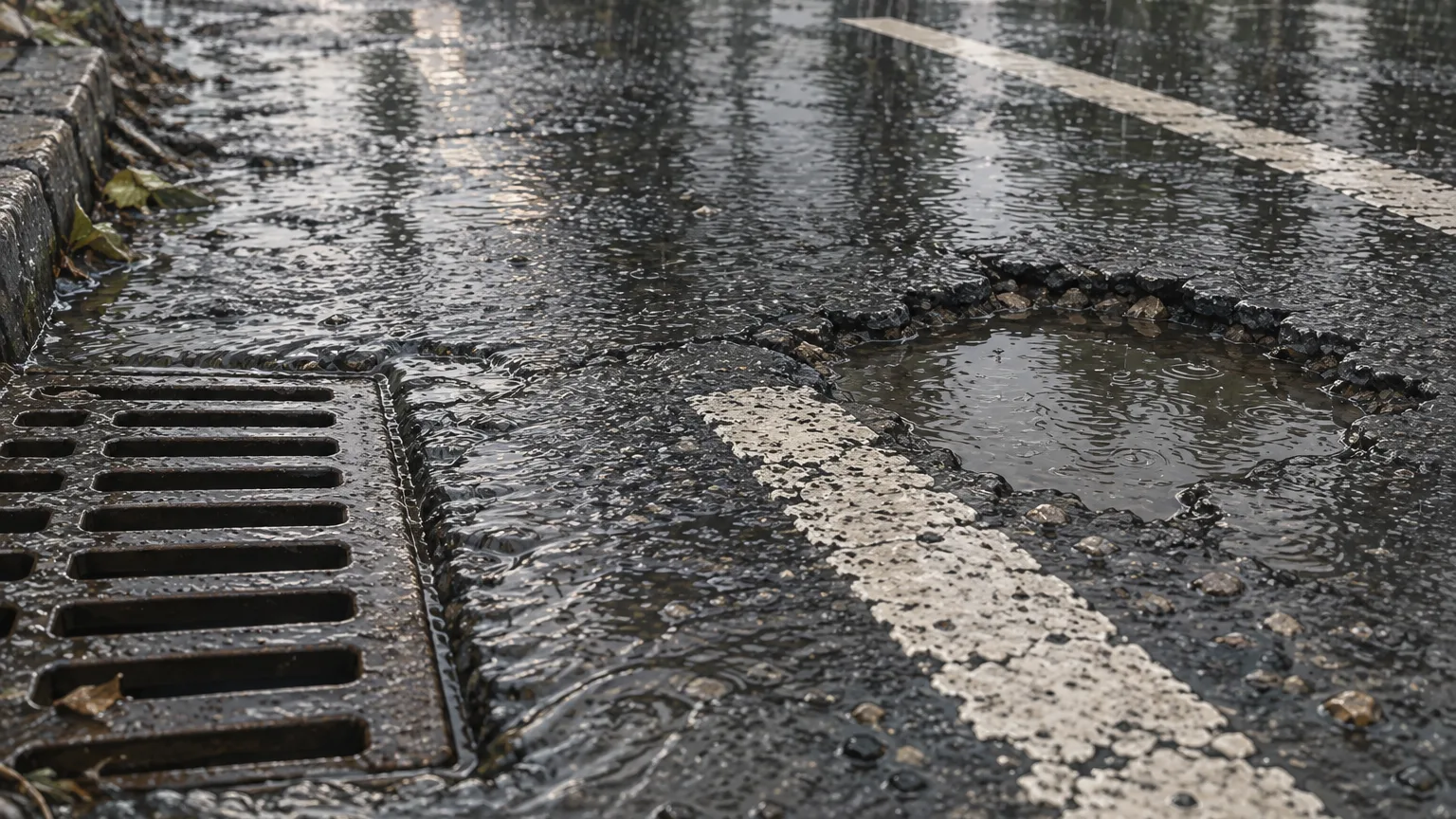
Take extra care when rain first starts: water mixes with dust and oil on the road, making the surface slippery. It washes off after a while, but don't assume the grip is back just because the rain has been falling for a few minutes.
Painted markings and metal covers stay slippery while the road is wet, and they're usually at junctions, exactly where you brake and turn. Braking distance is longer. Standing water hides potholes and the edge of the road, and in heavy rain you see less, as do the drivers around you.
Don't ride or drive into a flooded stretch. You can't judge the depth or what the road underneath looks like, and another vehicle getting through doesn't prove anything about yours. Turn back, take another route, or wait. Water in the engine stops it, and that's a repair.
If the rain gets too heavy to see properly, pull off somewhere safe and wait it out.
Leaving the bike parked for a day
Some afternoons it's easier to leave the bike where it is. Taxis, Grab and Gojek still run in the rain, though you wait longer and pay more, so order the ride before you need to leave rather than at the moment you're already late.
You don't have to use the same vehicle for every trip. If you're still choosing between the two, there's a page on that: scooter or car in Bali.
Breakdowns and damage
Oil changes and planned maintenance are on us for the whole rental.
If the vehicle stops working through no fault of yours, we come out and either repair it or bring you another one, and you don't lose the paid days you couldn't use. How fast the replacement arrives depends on where you are and what happened.
Message us on WhatsApp with your location pin and what's going on. We answer 09:00–23:00 WITA. Something serious outside those hours still gets an answer, but we're not a round-the-clock roadside service.
Damage is a different thing and is handled under the rental agreement. The car rental price does not include insurance or damage cover. Bikes have no damage or theft insurance. We tell you what a repair costs before the work starts, and every amount you could be liable for is written into the rental terms before you sign. Punctures, fuel and parking are yours at any time of year.
Before you set off
Keep your licence and documents on you and out of the rain. Checks don't stop because the weather is bad. The guide to licences and paperwork in Bali lists what's asked for.
Your passport stays with you. We photograph it and the licence at handover and keep them in the chat as the record of the rental; there's a page on renting without handing over your passport.
If the weather changes your plans and you want the vehicle longer, message us before the rental ends. Extensions depend on availability and start once we've confirmed them in writing and you've paid for the extra days.