 English
  Русский
 Driving licence and police checks in Bali
Which licence you need here depends on where it was issued. Licences from other ASEAN countries are recognised in Indonesia without an International Driving Permit; everyone else needs one alongside their home licence. The licence behind it has to cover the vehicle you're renting: an IDP is only a translation of your home licence, so it doesn't give you a category you don't already have.
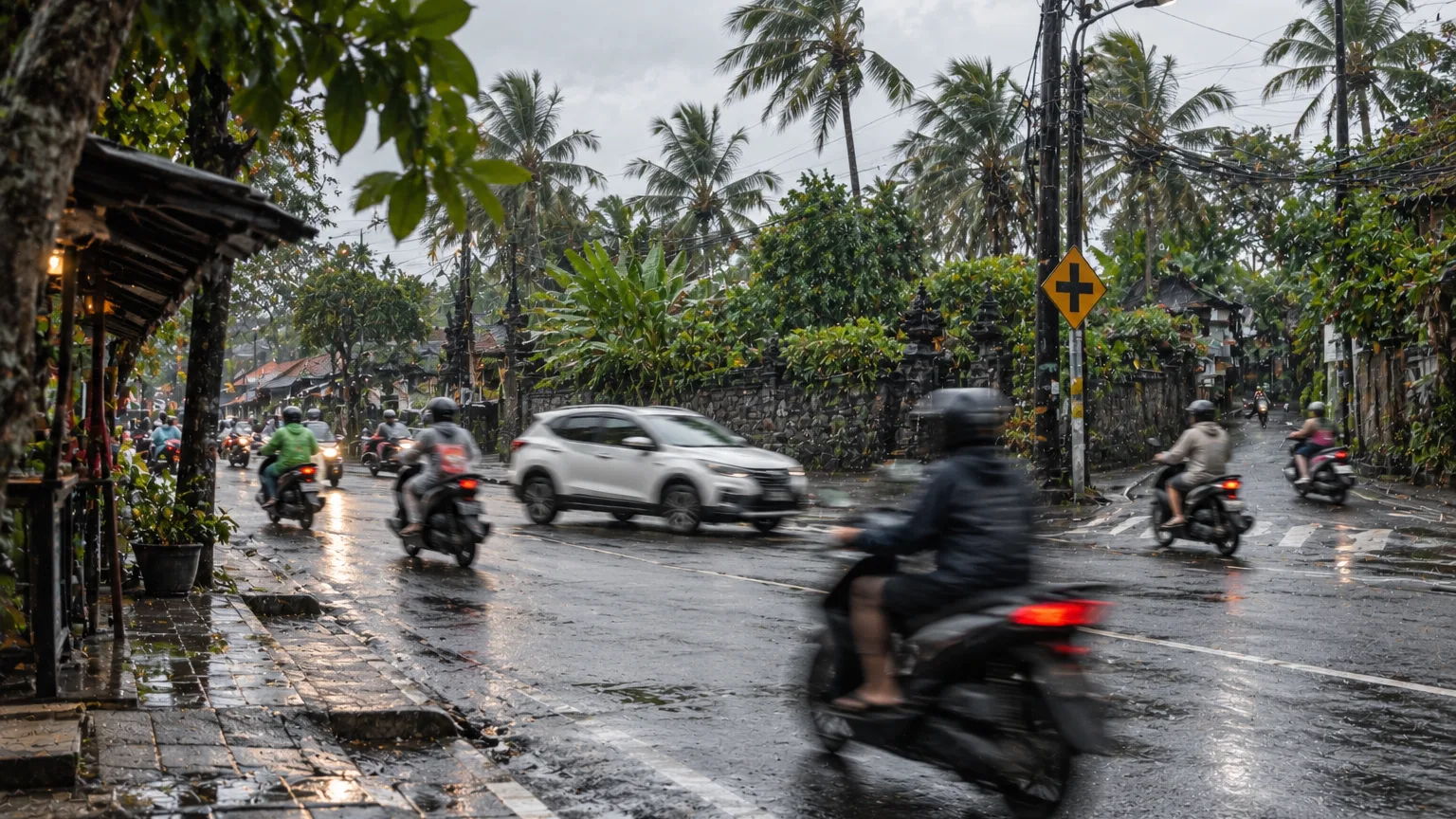
Day to day, checks are not constant. Riding without a helmet can get you stopped. In our experience Bali doesn't run the blanket roadside checks you may have met in Thailand, but that isn't something to count on.
We get this on WhatsApp every few weeks: tourists are not banned from renting vehicles in Bali. A governor proposed it in March 2023 and it got a lot of headlines. The head of Bali police said the opposite in public, and it never became law.
Passport and vehicle papers
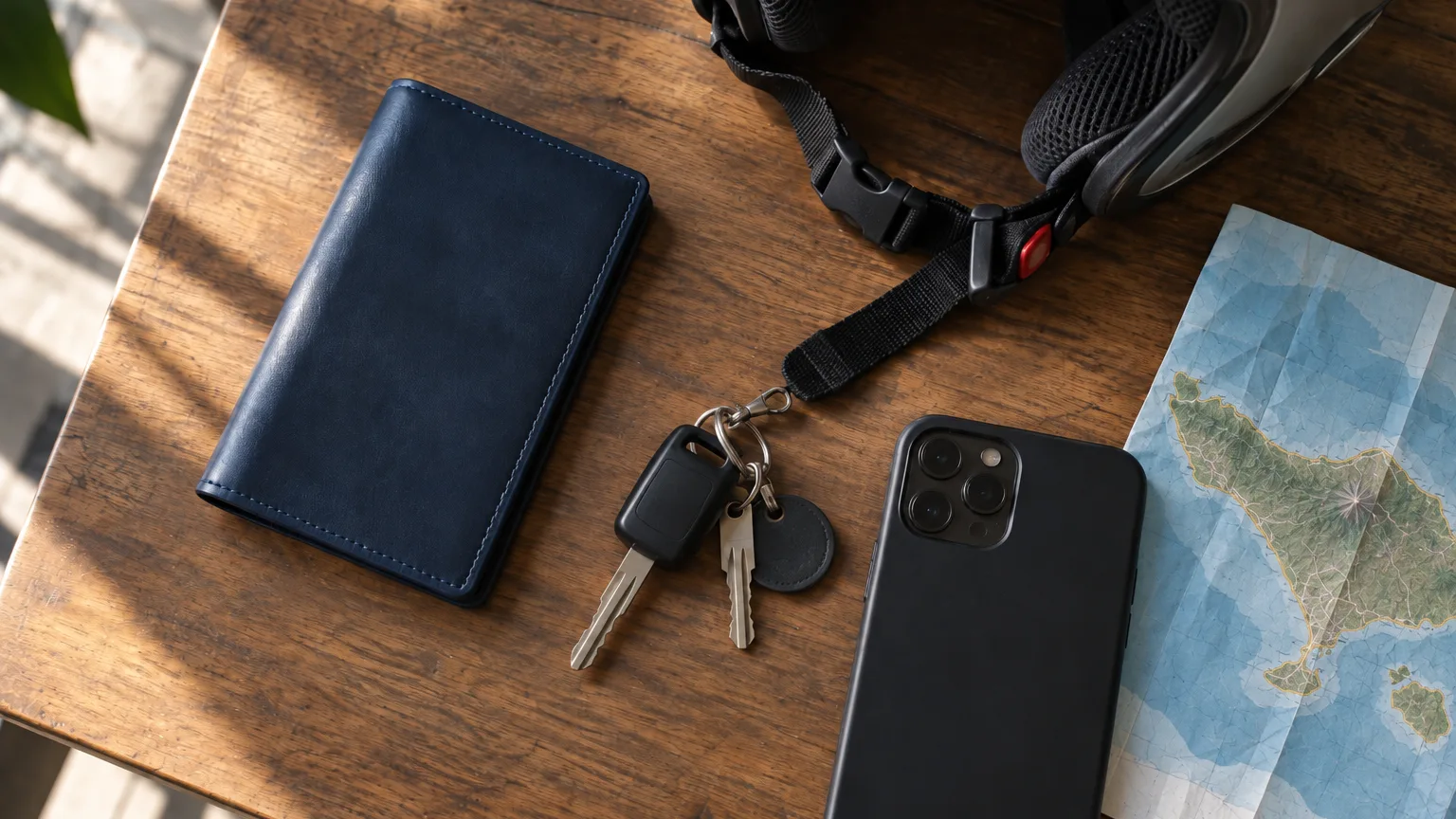
Since August 2025, and again on a new footing from April 2026, immigration officers have been running document checks in Canggu, Seminyak, Ubud and Jimbaran. Foreigners have been told to carry their passport. Many rentals here still take a passport as security, so you have nothing to show at a check.
We don't hold passports. We take a security deposit instead, written into the contract, and you get it back at the return, after we check the vehicle over together. There's a page on it: renting without handing over your passport. All possible charges are in the rental terms, which you sign when we hand the vehicle over.
The police also ask for the vehicle's papers. The STNK, the registration document, comes with the vehicle: a paper copy of it with the bike, or a photo in the chat, whichever you'd rather have.
Which foreign licences work without an IDP
Licences from other ASEAN countries are recognised in Indonesia without an IDP. This is the ASEAN agreement on the recognition of domestic driving licences, signed in Kuala Lumpur in July 1985, and every ASEAN country has joined it: Brunei, Cambodia, Laos, Malaysia, Myanmar, the Philippines, Singapore, Thailand, Timor-Leste and Vietnam.
The agreement applies to temporary stays. If you live here on a KITAS, it doesn't cover you and you need an Indonesian SIM.
It works inside the classes your own licence already opens, so it covers a motorbike only if your home licence does.
A licence that has expired at home, or isn't valid there, isn't valid here either.
If yours isn't in English, a Vietnamese or an older Thai licence for instance, bring a certified English translation with it.
Everyone else needs an IDP in the category for the vehicle: B for a car, A for a motorbike.
Fines and police checks
You'll see two sets of numbers, and they're not the same thing.
The first is the law. These are maximums a court can impose, not what anybody pays at the roadside:
- riding without a licence, article 281: up to four months, or up to Rp 1.000.000
- holding a licence but not producing it, article 288(2): up to one month and/or up to Rp 250.000
- vehicle without its STNK, article 288(1): up to two months, or up to Rp 500.000
- riding without an SNI-standard helmet, article 291(1): up to one month, or up to Rp 250.000
- carrying a passenger without a helmet, article 291(2): the same
The second set is the one you find on travel blogs: two hundred and fifty to five hundred thousand, paid on the spot. Those are informal payments, not the law and not a set rate.
Articles 260(a) and (d) also allow an officer to hold a vehicle temporarily and to take a licence, the vehicle or the STNK as evidence.
In November 2025 Bali police ran island-wide traffic checks and gave foreigners one piece of advice: if you can't ride a bike confidently, don't ride it yourself. That was advice, not a change in the law.
Motorbike licences under Indonesian law
If your home licence only covers 125 cc, your IDP doesn't cover a litre bike either, and on that bike you count as riding without a licence. Category A on an IDP shows no engine-size limit, and there's no published table matching A to C, C1 or C2.
UU No. 22/2009, article 80(d), says a SIM C is valid for a motorcycle. The law itself doesn't mention engine sizes.
The engine sizes come from a lower-level regulation, Perpol No. 5/2021, article 3 point 2. SIM C covers motorcycles up to 250 cc. SIM C I covers over 250 cc up to 500. SIM C II covers above 500.
Foreign licences are covered by the same regulation, article 3 point 13.
Licences for our bikes and cars
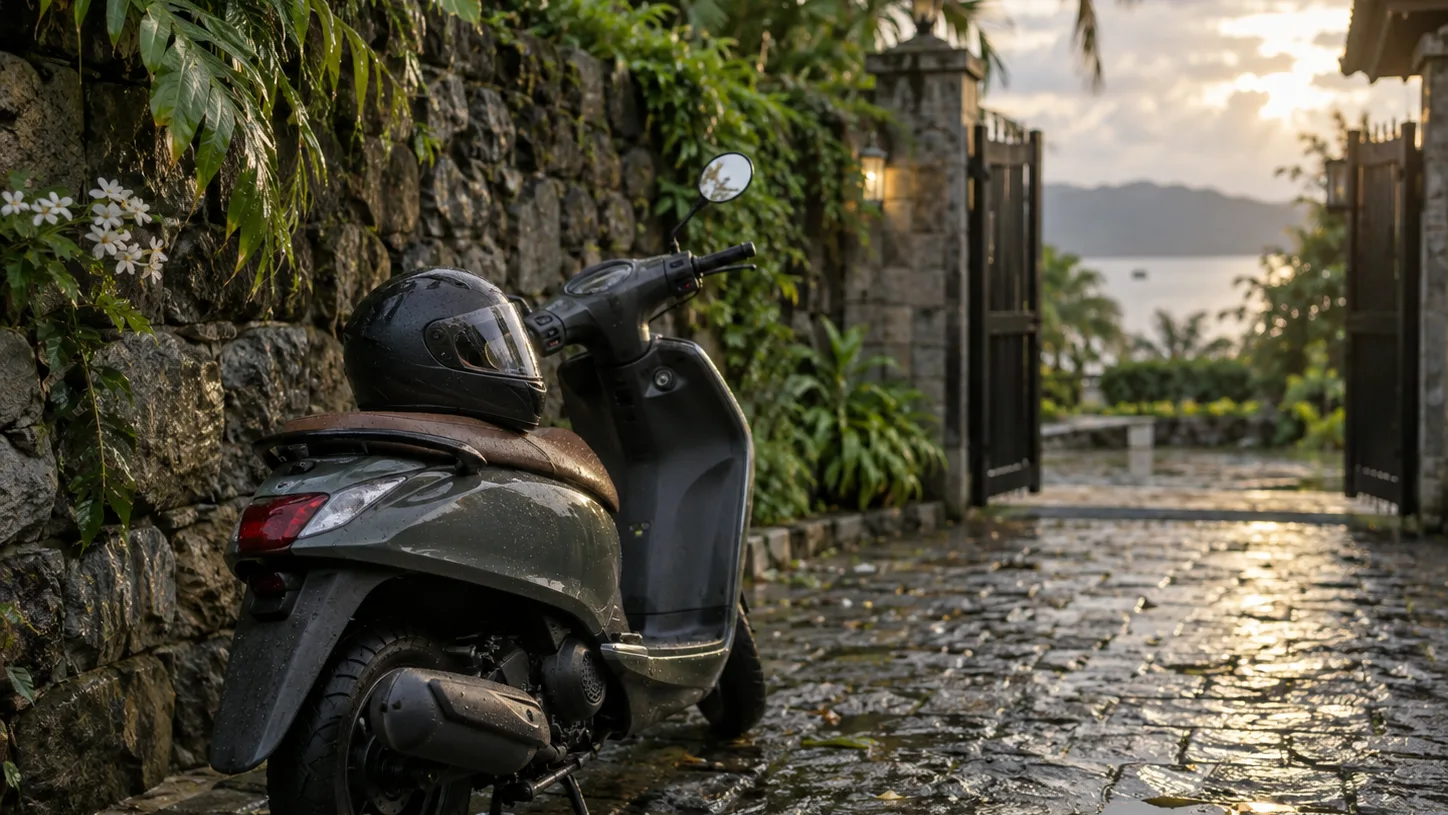
The Yamaha XSR 155 is 155 cc. The Honda CRF 150L has a 149cc engine. Both are under 250 cc, so a SIM C covers them, and so does a normal motorcycle category on most home licences.
Our cars work the same way: visitors drive on an IDP plus their home licence, or on an ASEAN licence, and Indonesian drivers need a SIM A.
What we ask for
IDP requirements are set by law, not by the rental company.
At handover we look at your licence and write its number into the contract. You confirm there that your licence is valid, and fines or anything else that follows from a check are yours.
We rent from 18. That's our rule, and it's separate from what the law asks for above.